Tips for the Perfect Handfasting Ceremony

A handfasting ceremony can be one of the most moving parts of a wedding, but it works best when it feels intentional rather than improvised. The cord, the words, the timing, and even the way hands are joined all shape the meaning of the moment.
Handfasting has roots in ancient Celtic and European marriage customs, though modern couples adapt it in many ways. Some use it as the heart of a spiritual ceremony. Others include it as a symbolic ritual within a civil, religious, interfaith, or secular wedding. There is no single “correct” version, which is part of its beauty.
The key is to make choices that feel personal, clear, and easy to follow. A perfect handfasting ceremony does not need to be elaborate. It needs to be thoughtful.
Understand what the cord is meant to symbolize
At its simplest, handfasting is the act of joining two people’s hands and tying them with a cord, ribbon, scarf, or fabric. The tie represents commitment, unity, and the promises being made.
The phrase “tying the knot” is often linked to rituals like this, which makes the symbolism easy for guests to understand. Still, the meaning should come from the couple, not only from tradition.
A handfasting can represent:
A shared life beginning
A promise to support each other
Two families or histories coming together
Love that allows both closeness and freedom
A spiritual or ancestral blessing
A commitment made in front of witnesses
The tone can be solemn, joyful, playful, sacred, or poetic. Some couples prefer formal vows while their hands are bound. Others choose a short blessing read by an officiant, friend, elder, or family member.
One useful way to plan the ritual is to answer this question:
What do we want this binding to mean when we look back on it years from now?
That answer will guide almost every other choice, including the cord.
Choose the right handfasting cord with care
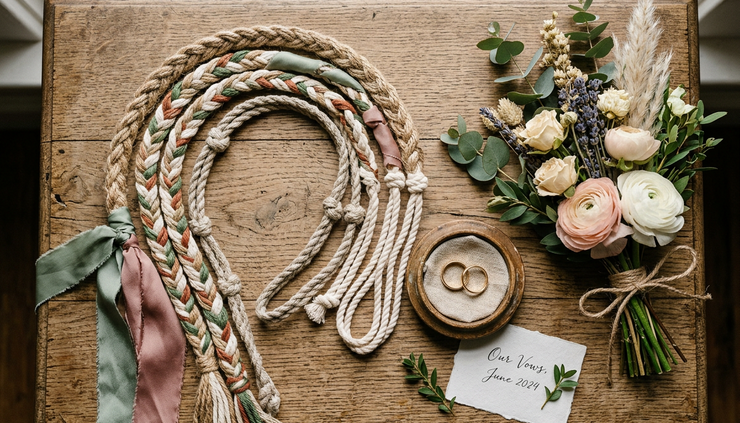
The cord is more than a prop. It will be handled during the ceremony, photographed closely, and possibly kept for years. The right cord should suit the ceremony’s meaning, look good with the setting, and feel comfortable around the hands.
Pick a material that matches the mood
There are many good options, and each one creates a different feeling.
Cord material | Best for | What to watch for |
Cotton | Soft, relaxed, natural ceremonies | May look simple unless braided or embellished |
Silk or satin ribbon | Elegant weddings, romantic styling | Can slip easily if tied too loosely |
Velvet ribbon | Rich texture, autumn or winter ceremonies | Thicker ribbon may be harder to knot neatly |
Macramé cord | Boho, rustic, or outdoor weddings | Choose a soft version so it does not scratch |
Linen | Minimalist or heritage-inspired ceremonies | Wrinkles easily, which may be part of the charm |
Braided mixed fibres | Personal, colourful, symbolic rituals | Test the braid so it hangs evenly |
Family fabric | Deeply sentimental ceremonies | Fragile fabric may need backing or stitching |
If the ceremony is outdoors in Canada, think about the season. A thin satin ribbon may be lovely in July, but harder to handle with cold fingers during an October ceremony. A soft braided cord or wider ribbon may be easier to manage in cooler weather.
Choose colours with meaning
Colour symbolism varies across cultures and personal beliefs, so treat it as inspiration rather than a strict rule. Choose colours because they feel right, not because a chart says they must.
Common choices include:
White Purity, peace, clarity, a fresh beginning
Green Growth, home, nature, patience
Blue Trust, calm, loyalty, emotional safety
Gold Joy, warmth, abundance, celebration
Red Passion, courage, vitality, deep love
Purple Spirituality, wisdom, imagination, dignity
Black Protection, strength, grounding, seriousness
Many couples use two or three colours. One colour can represent each person, while a third represents the life they are building together. Others choose colours from their wedding palette so the cord blends with flowers, clothing, and decor.
If the cord will be displayed at home later, choose colours that still feel meaningful beyond the wedding day.
Get the length right
A handfasting cord should be long enough to wrap comfortably around both wrists or hands and still have ends that hang nicely.
For most ceremonies, a cord around 1.5 to 2 metres works well. A shorter cord can feel awkward, especially if the officiant needs to create a knot or loop. A much longer cord can look dramatic, but it may trail, tangle, or distract from the moment.
Test the cord with the actual hand position before the wedding. If the couple will stand hand in hand, the cord needs one length. If they will cross wrists, stack hands, or hold both hands together, it may need more.
Decide whether to use one cord or several
A single cord keeps the ritual simple and elegant. Multiple cords create layers of meaning.
One cord works well when:
The ceremony is short
The couple wants a clean look
The officiant will speak one blessing
The cord has strong personal meaning on its own
Several cords work well when:
Each cord represents a vow or value
Family members will place cords
The couple wants colour symbolism
The ritual is a central part of the ceremony
If other people take part, rehearse the order. Guests will enjoy the moment more when it flows smoothly.
Plan the ceremony so the ritual feels natural
A handfasting ceremony is brief, but it still needs structure. Without a plan, the officiant may fumble, the cord may twist, or the couple may not know where to place their hands.
The ritual usually fits into one of three places.
Before the vows
This creates a sense of anticipation. The couple’s hands are joined before they speak their promises, which makes the vows feel physically grounded.
This placement works well when handfasting is a major part of the ceremony.
During the vows
The cord is wrapped as vows are spoken. For example, the officiant might bind the hands after each promise or after a shared vow.
This option feels powerful, but it needs careful pacing. If the cord is being wrapped too often, the moment can become busy.
After the vows and ring exchange
This places handfasting as a final symbolic seal on the promises already made. It is easy for guests to follow and works well in ceremonies that also include traditional vows and rings.
For many weddings, this is the smoothest choice.
Keep the wording clear
The officiant does not need to explain every historical detail. Guests only need enough context to understand what they are seeing.
A simple introduction might sound like this:
“Today, these hands are joined as a sign of the promises being made. This cord does not bind by force. It honours the choice to walk together, to support each other, and to create a life built with care.”
That kind of wording makes the ritual accessible to guests from many backgrounds.
Rehearse the practical details
Small details make a big difference. A handfasting ceremony can be emotional, and no one wants to think about knot mechanics in front of a crowd.
Practise the hand position
Decide whether the couple will:
Hold one hand each
Join both hands
Cross wrists in an infinity shape
Stack hands one over the other
Face the officiant or face each other
The infinity shape is popular because it looks beautiful and carries symbolic meaning. It can also be awkward if the couple has a height difference, bulky sleeves, mobility needs, or a large bouquet. Comfort matters more than the visual.
If one partner has accessibility needs, adapt the ritual. The cord can be draped over hands, held between the couple, placed over shoulders, or tied around a shared object. The meaning remains.
Test the knot
Not every knot works well with every material. Satin slips. Thick cord bulks up. Loose macramé can snag.
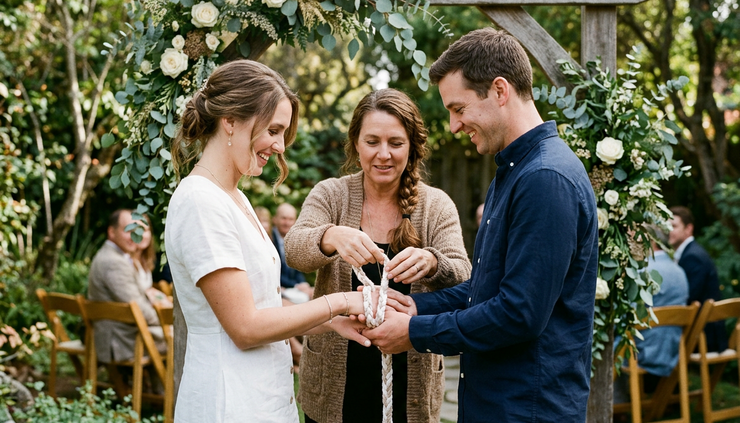
A common choice is a simple wrap with a loose knot or loop. The goal is symbolic binding, not restraint. The couple should be able to step away safely and comfortably.
Some couples prefer the cord to create a knot when they gently pull their hands apart. This can look lovely, but it should be rehearsed. It often works best with a cord that has some texture and enough length.
Assign one person to handle the cord
The cord should not be an afterthought sitting somewhere random. Ask one person to place it where it needs to be and hand it to the officiant at the right time.
This could be:
The officiant
A ceremony attendant
A family member
A friend involved in the ritual
A child, if the role is simple and supported
Keep the cord free of tangles. If there are multiple cords, lay them in order.
Think about clothing and flowers
Sleeves, bracelets, watches, gloves, and bouquets can affect the ritual. Long lace sleeves may catch. A bracelet may sit awkwardly under the cord. A large bouquet needs to be handed off first.
During rehearsal, use a scarf or ribbon as a stand-in if the actual cord is packed away. The point is to practise movement, not just words.
Make the ceremony personal without making it complicated
The best personal details are easy to understand and easy to perform. A handfasting ceremony already carries strong symbolism, so a few thoughtful touches are enough.
Add meaningful words
The officiant can speak the entire handfasting blessing, or the couple can add short lines.
For example:
“May this cord remind us to choose each other with patience.”
“May these hands build a home filled with kindness.”
“May we stay joined in love while honouring each other’s freedom.”
Short lines often land better than long readings. They give guests space to absorb the moment.
Include loved ones with intention
Family or friends can place cords, offer blessings, or read a short passage. This works especially well when each cord has a meaning.
For example, one person could place a green cord for growth. Another could place a blue cord for trust. A third could place a gold cord for joy.
Keep participation manageable. If too many people approach, the ceremony may slow down and lose focus. Two or three participants often feel more intimate than a long procession.
Honour heritage carefully
Some couples include handfasting because it connects with Celtic, Pagan, Wiccan, or family traditions. Others simply appreciate the symbolism. Both approaches can be respectful when handled with care.
If drawing from a living spiritual path or cultural practice, learn from reliable sources and avoid treating sacred elements as decoration. Use words that reflect the couple’s real beliefs. If the ceremony is secular, say so through simple language focused on commitment, love, and community.
Create a keepsake
After the ceremony, the cord can become a lasting reminder of the vows.
Ideas include:
Frame the cord with a copy of the vows
Keep it in a memory box
Wrap it around a wedding album
Display it near a handfasting photo
Sew a piece of the cord into another keepsake, if the material allows
If preserving the cord matters, avoid wax, glitter, or fragile embellishments that may shed or stain.
Avoid common handfasting mistakes
A beautiful ceremony often comes down to preventing small problems.
One common mistake is choosing a cord only for looks. A cord can photograph beautifully and still feel scratchy, stiff, slippery, or too short. Hold it, wrap it, and knot it before deciding.
Another mistake is making the ritual too long. Guests do not need a full lecture on the history of handfasting. A short explanation, a meaningful binding, and a clear blessing are usually enough.
Couples also forget to plan the exit. Will they remain loosely bound for a final prayer or pronouncement? Will the officiant untie the cord? Will the couple slip their hands out and keep the knot intact? Each option works, but someone should know the plan.
A final issue is unclear photography. Tell the photographer when the handfasting will happen. This gives them time to move into position for close-up shots of the cord, hands, and expressions. The ritual may only last a minute or two, so timing matters.
Let the cord carry the story
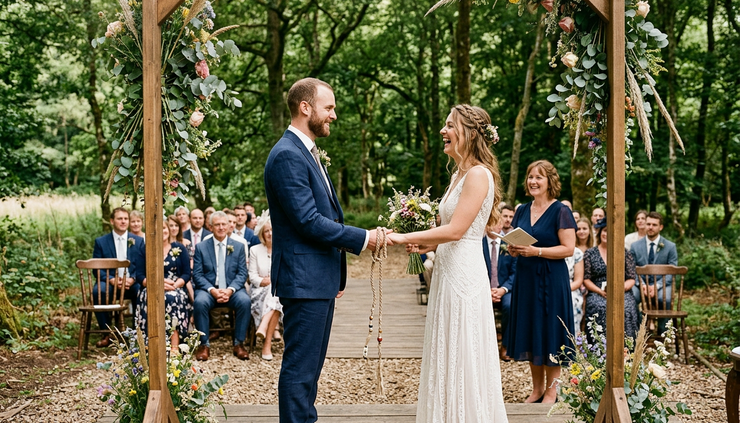
The perfect handfasting ceremony is not the one with the fanciest knot or the most elaborate script. It is the one where the symbol matches the promise.
Choose a cord that feels good in the hand, suits the setting, and carries meaning beyond the wedding day. Practise the movements. Keep the words clear. Let the ritual breathe.
When the cord is chosen with care and the ceremony is shaped with intention, the moment becomes more than a beautiful photo. It becomes a physical memory of the promises made, held in the hands and kept for the years ahead.


Comments